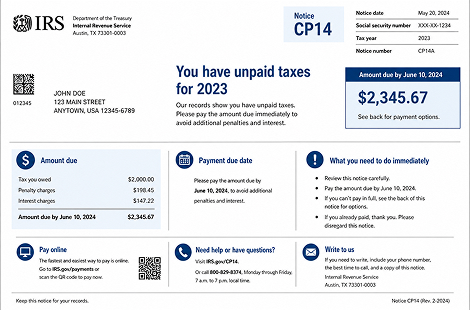
CP14
CP14 is the first bill for an unpaid balance. It lists the tax, penalties and interest, and gives a due date. Check the amount, then pay or ask for a payment plan before that date.
Read about CP14





How much do you owe the IRS?



IRS notices come in a set order, and each one gets closer to collection. Find yours to see what the IRS can do next.
CP14 is the first bill for an unpaid balance. It lists the tax, penalties and interest, and gives a due date. Check the amount, then pay or ask for a payment plan before that date.
Read about CP14
CP501 and CP503 are reminders sent when a CP14 balance stays unpaid. Each one shows a higher total as penalties and interest grow. The CP504 usually comes next.
Read about CP501
CP504 says the IRS intends to levy. At this stage it can take your state tax refund. If the balance stays unpaid, the next letter is usually the final notice before a levy.
Read about CP504
LT11 and Letter 1058 are the final notice before the IRS levies wages, bank accounts or other property. You have 30 days from the notice date to request a Collection Due Process hearing.
Read about LT11
A levy takes the money itself: part of each paycheck, the funds in a bank account, or other property. A bank must hold levied funds for 21 days, which leaves a short window to get them released.
Read about bank leviesOpen IRS notices, the January 15 estimated payment, or a balance you can’t pay: see where to start.
Four steps, and you always know which one you’re in.




We only take cases we believe we can resolve
One client owed $324,388. After an Offer in Compromise, the IRS settled the account for $100.
“Had a great experience with Yesenia from Global Gate Taxes this year. she was very thorough, professional, and took the time to explain every line of my tax return to me. The process was fast and easy, and I felt well-supported throughout. 10/10 would recommend to anyone looking for a reliable person.”

“Ivy and all the others have been a great team to work with. They have been most helpful and very attentive to everything needed to get my tax situation straightened out. They are a trustworthy group to work with. My money has been well spent paying them to help me.. I'm glad they was able to help I've recommended them to others...”

“I had an excellent experience working with this accounting firm. I started using their services this year, and I’m confident they’ll be handling my taxes for years to come. As a self-employed handyman, I had a lot of questions about my taxes. Their team guided me through the entire process, prepared all the necessary documents quickly and accurately, and made everything easy to understand. They are professional, knowledgeable, and responsive. I highly recommend them to anyone looking for reliable accounting and tax services.”

“Global Gate Tax Relief did such a great job for me. They saved me a lot of money I owed to the IRS. They were able to fix my situation and put me back on track. Thank you everyone who worked on my case. Loyal Costumer”

“Global Gate Tax Relief is great. My rep Ivy has been nothing short of amazing with all of my questions and concerns. They have helped me out so much and I have reached out to family and friends to refer them to Global Gate Tax Relief.”

“Great consistent services! Socorro Hernandez was a pleasure to work with, always following up and ensuring that we have all our proper paperwork for tax season. Highly recommend!!”


Settle for less than you owe when you can’t pay the full balance. The IRS bases its decision on your income, expenses and assets. We check whether you qualify before you apply.

The IRS Fresh Start changes made payment plans and lien withdrawals easier to get. We check which of these options fit your case and handle the paperwork.

Pay the balance in monthly amounts. Balances up to $50,000 often qualify for a plan without a full financial statement. For larger balances, we prepare the paperwork the IRS asks for.

Penalties can add thousands to a tax bill. If you had no penalties in the prior three years, or a good reason such as illness, we ask the IRS to remove them.

If paying the IRS would leave you short on rent, food or utilities, we ask the IRS to pause collection. We document your income and expenses to support the request.

If the IRS has levied your wages or bank account, or filed a lien, we work to get it released. Act quickly: a bank holds levied funds for only 21 days.
The consultation is free. We pull your IRS record and tell you what you owe and what the IRS can do next. If we can’t lower your balance, we’ll tell you on the first call.


